Soundpainting script
Marine Monseux zoomCreated by Walter Thompson in 1974, soundpainting is a sign language that enables real-time conducted improvisation with an ensemble of artists (music, dance, theatre, visual arts, etc.). Put differently, soundpainting is a kind of “Simon Says,” where a conductor —called soundpainter— stands facing a group of performers and uses a series of gestures to indicate what should be played immediately.
Because the immediacy required by performance makes it very difficult for performers to take notes, autonomous learning is even more challenging, given that very few resources exist for reviewing the language. Moreover, no official writing system currently allows it to be notated in the form of scores.
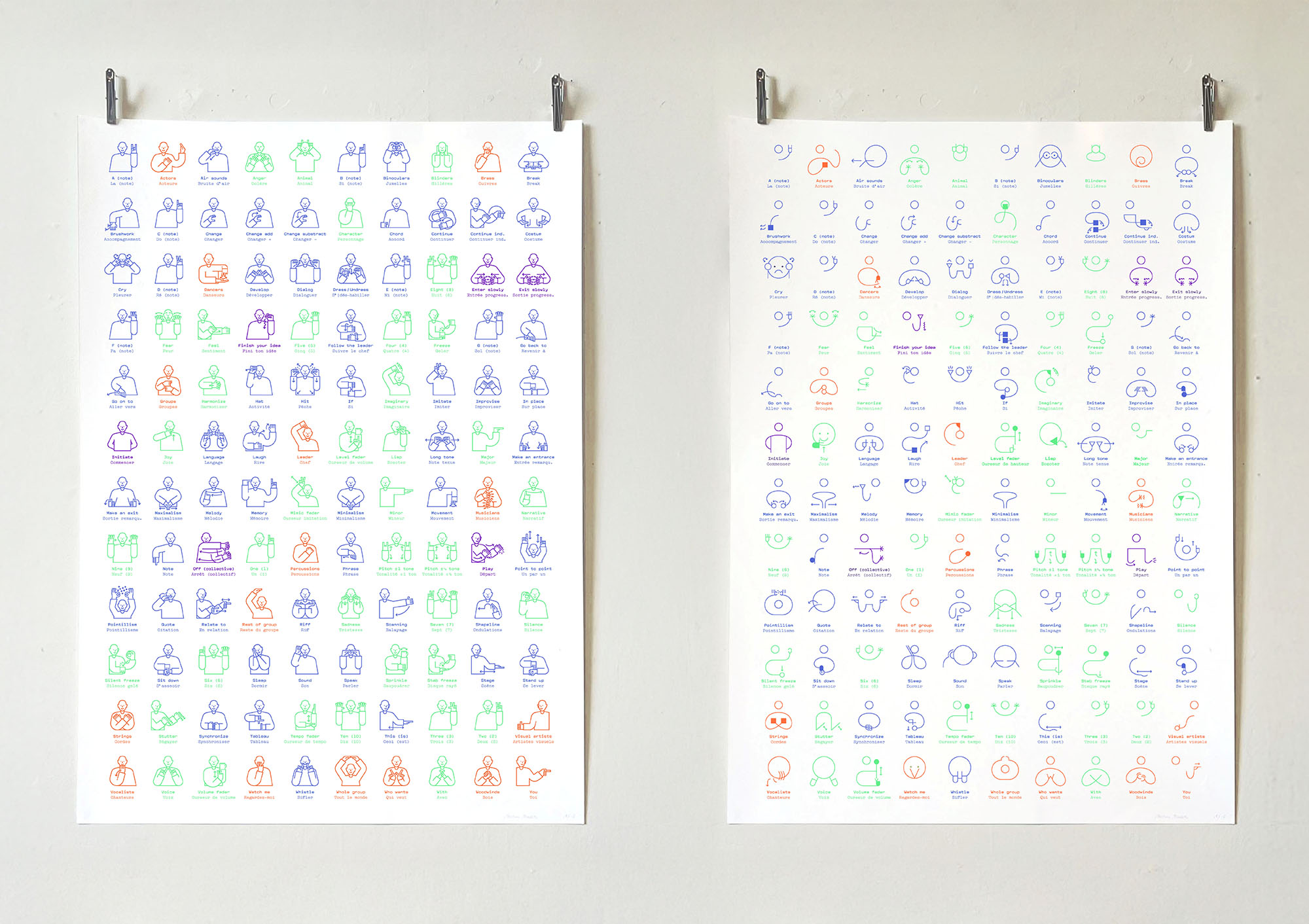
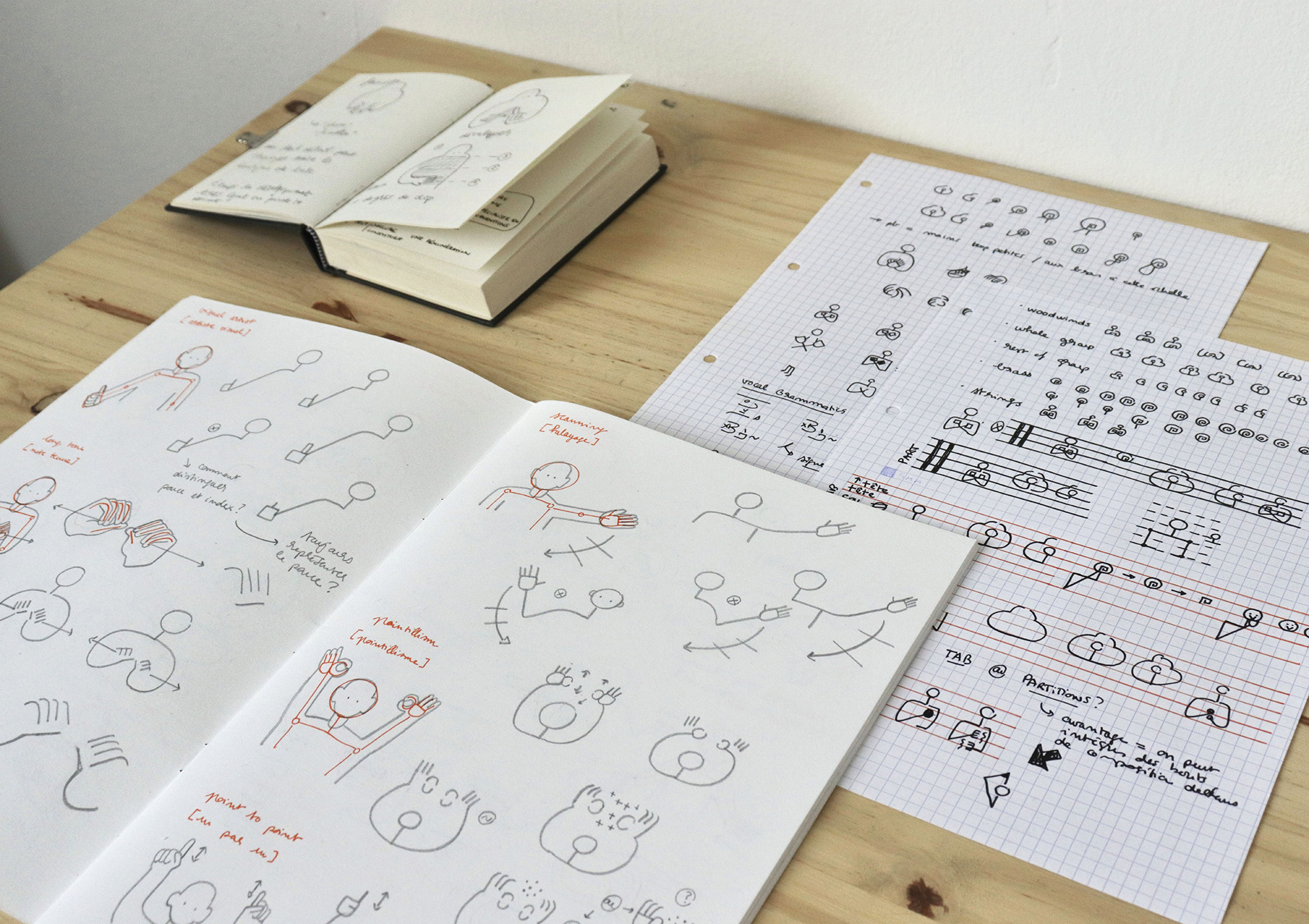
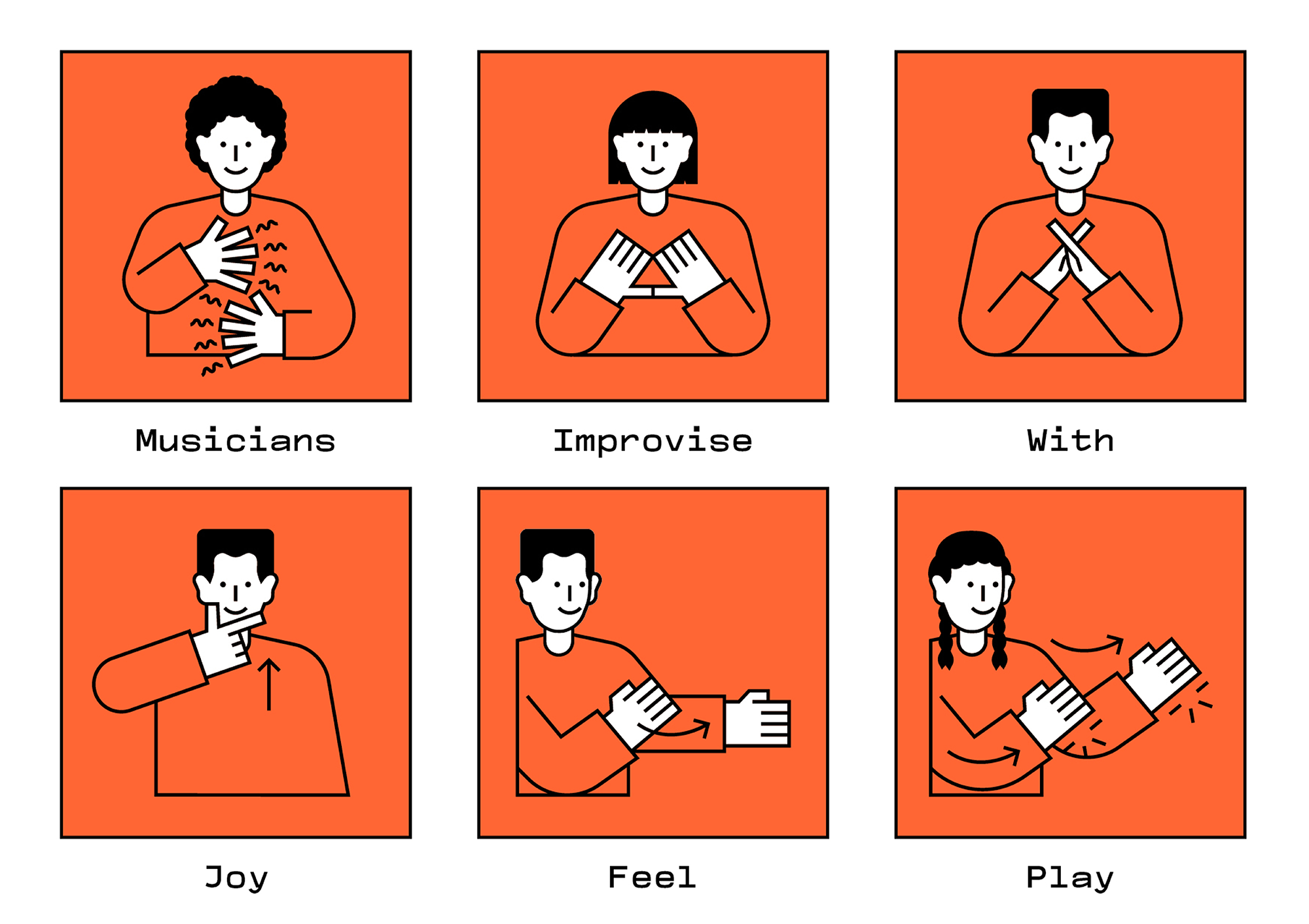
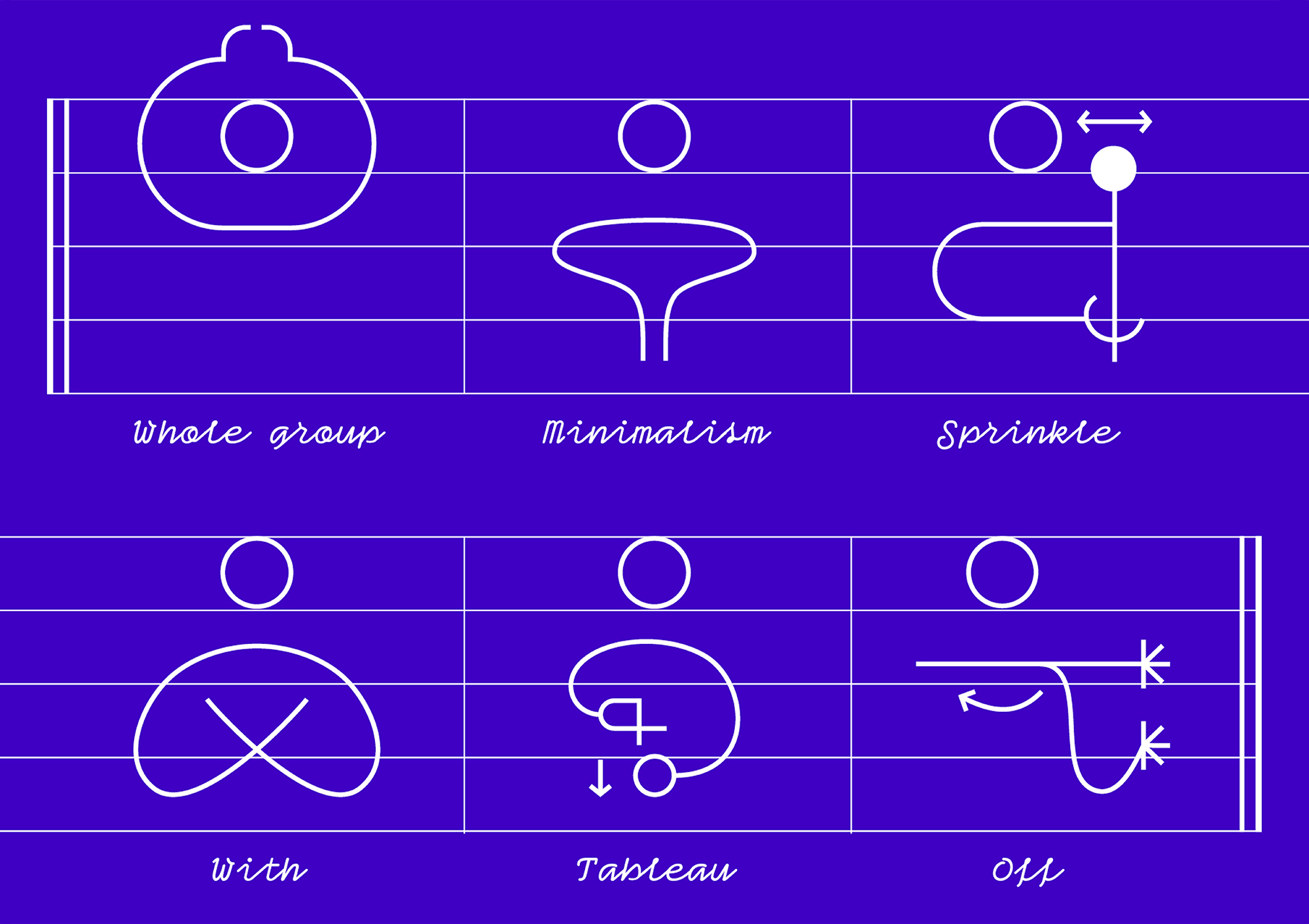
This research project therefore aims to develop a typographic family (Soundpainting-script) comprising three different writing systems, each with a graphic register specific to the language to respond different uses and objectives: an illustrative system representing the signs as they are executed (didactic / transmission), a hybrid “stenographic” system for writing graphic scores (composition / preservation), and a morpho-graphic system synthesizing the human body to make note-taking accessible to everyone (notation / representation).
Being able to write soundpainting scores could also help legitimize the discipline and further institutionalize it within conservatories, because writing a score is, first and foremost, a way of saying “I am the author of my work!” More broadly, notating soundpainting would make it possible to define the unique identity of each soundpainter’s work, to establish repertoires, to keep a record of composed or improvised pieces, and to abstract the language from space and time—granting it a level of autonomy and horizontality that is currently impossible, given its immediacy and the teacher-learner hierarchy that remains the primary mode of transmission. Finally, making soundpainting readable would enable the creation of graphic archives that could be used for historical, aesthetic or scientific research, and ultimately deepen our understanding of the language.