The Frutiger Archive: Breughel
Mickael Bourguer zoomAdrian Frutiger (1928–2015) began his apprenticeship between 1944 and 1948 at the Otto Schlaefli printing house in Interlaken (Switzerland), directed by Ernst Eberhard. After six months working as a compositor at Gebr. Fretz AG, he continued his training at the Zurich School of Applied Arts. In 1952, he joined the Parisian type foundry Deberny & Peignot as a type designer. That same year, he also began teaching at the École Estienne and the École nationale supérieure des arts décoratifs, and would later share his knowledge through several publications.
While Frutiger gained international recognition with the type family Univers, whose development he began in 1953, his work remained closely tied to major technological innovations in the field of typesetting. From 1954 onward, he was tasked with adapting existing typefaces for the Lumitype phototypesetter and designing new ones. He later took part in experiments related to the digital composition processes implemented at Linotype from 1968 onward, while also designing OCR-B for the ECMA, a typeface intended for machine reading. He also explored the specific constraints of typesetting on typewriter-based systems, notably with the IBM Composer.
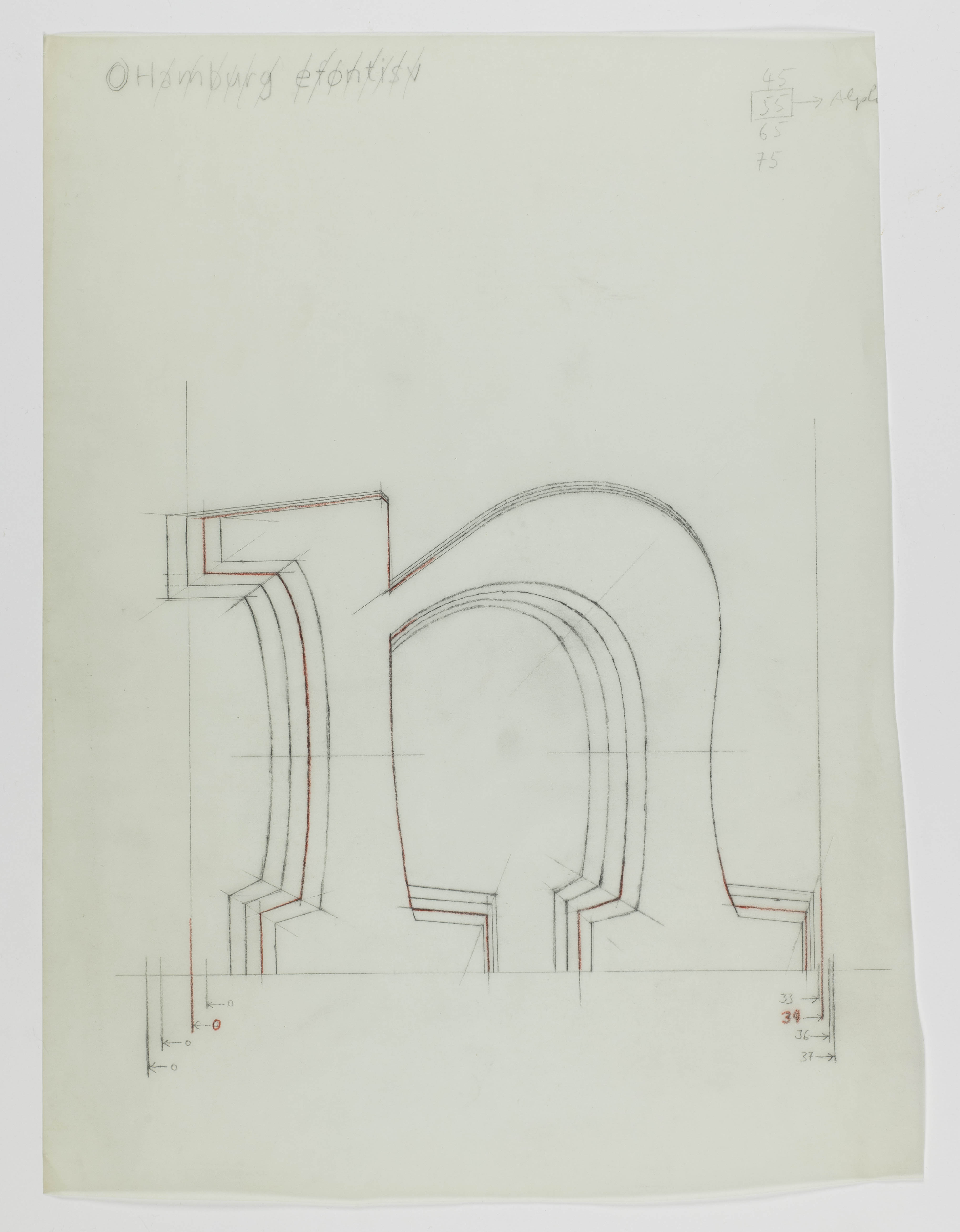
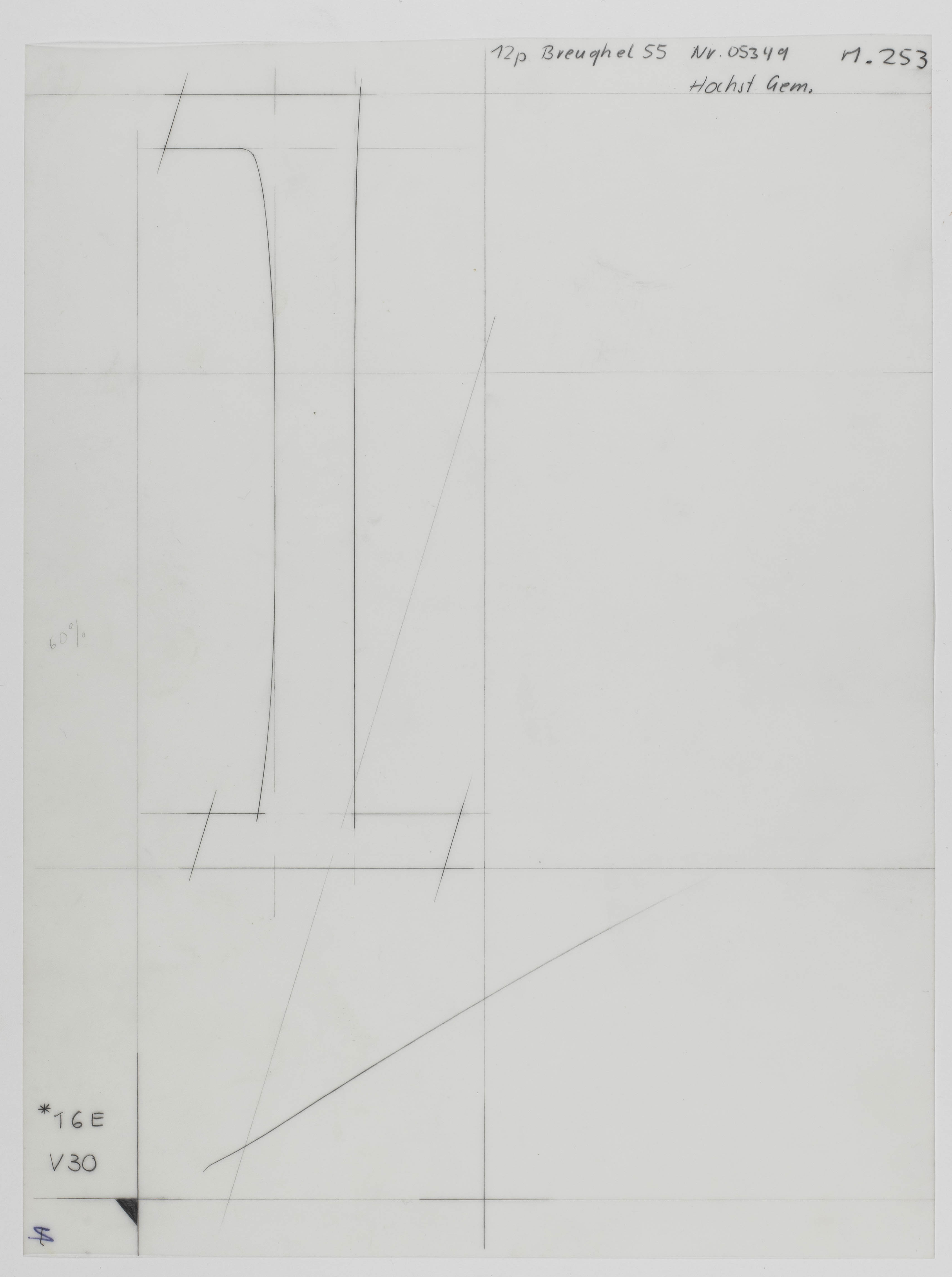
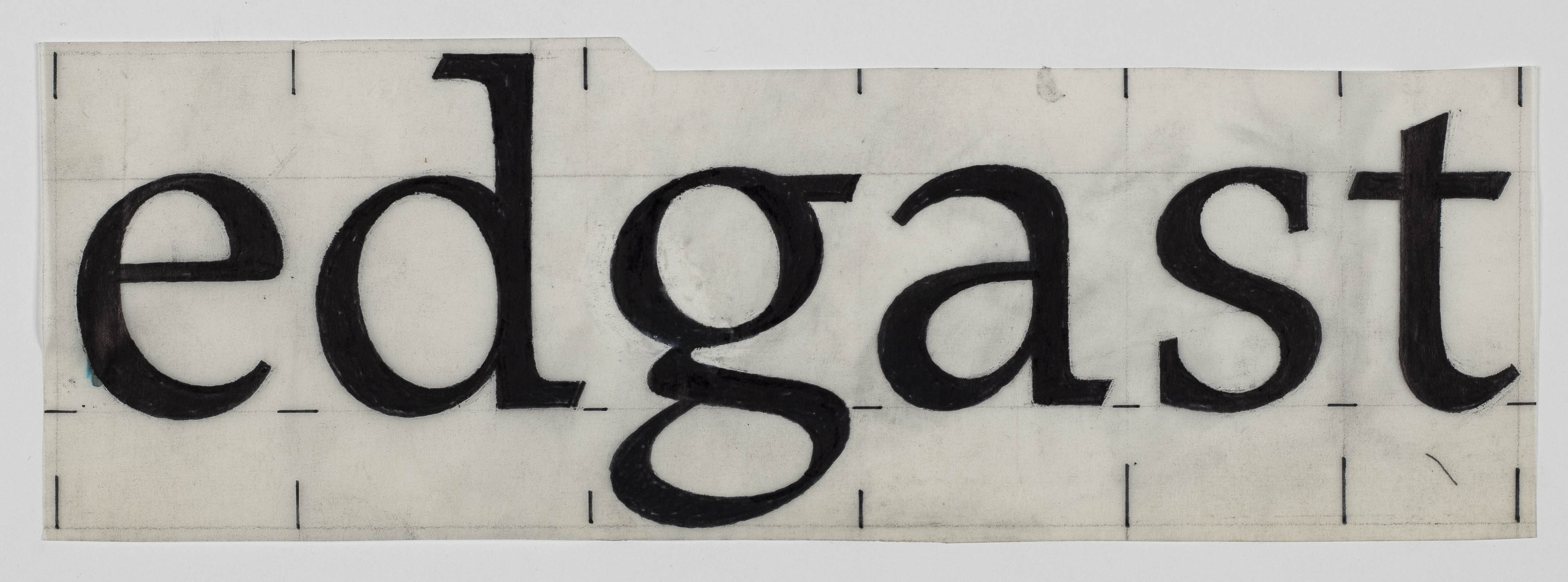
The exploration of Frutiger’s previously unseen archives, covering the years 1961 to 1975 and originating from his studio in Arcueil — the Atelier Frutiger, later Frutiger+Pfäffli — now preserved at the ANRT before their transfer to the Museum für Gestaltung in Zurich, forms the core of this research. The project aims to study, process, classify, and document these original proofs and drawings, with particular emphasis on the influence of technology on letterforms — a subject that deeply fascinated Frutiger.
In the 1970s, while working for Linotype, he conducted systematic studies on the relationship between type design and composition technologies. These investigations would lead to the creation of Breughel, published in 1981, a typeface specifically conceived for CRT-based digital composition and designed to overcome technical limitations through its very drawing.